Case Report
Semi-automated rubrics for evidence-based medicine assessment: a case report on grading
time reduction
Juliana Magro1
doi: http://dx.doi.org/10.5195/jmla.2026.2343
Volume 114, Number 3: 290-296
Received 10 2025;
Accepted 02 2026
ABSTRACT
Background:
Librarians providing feedback on Evidence-Based Medicine (EBM) assignments face time
constraints. This case report describes implementing a semi-automated rubric — defined
here as a tool that automatically calculates scores from grader-selected ratings while
narrative feedback is still written by the instructor — to reduce grading time for
an EBM capstone assignment for first-year medical students.
Case Presentation:
Two cohorts of approximately 100 students completed the same EBM assignment. The 2023
cohort received manual feedback, while the 2024 cohort received feedback using the
semi-automated rubric. Grading time was logged for both cohorts. The rubric, adapted
from a template, automatically calculates scores based on selected criteria, streamlining
the feedback process.
Conclusions:
The semi-automated rubric reduced grading time by 30%, from an average of seven minutes
per assignment to five minutes. This simple, adaptable intervention can help reduce
educator workload, improve feedback timeliness, and enhance assessment consistency.
While limited by its single-grader and single institution design, this case report
offers practical insights for educators seeking to improve feedback efficiency in
EBM and other disciplines.
Keywords:
Assessment;
Medical Education;
Evidence-Based Medicine;
Medical Librarianship.
BACKGROUND
Librarians participate in educational interventions related to evidence-based medicine
(EBM) via curriculum-integrated instruction programs and standalone classes. They
often provide feedback to learners on their performance on EBM-specific assignments
or Objective Structured Clinical Examination (OSCEs). Librarian feedback may be limited
to distinct EBM steps (formulating questions, searching for evidence, critical appraisal)
[1–3], or may include the entire EBM process [4]. This is evidenced in the literature, including in a recent study reporting that
librarians’ viewed assessment of EBM as an integral component of their role in educating
medical students and as part of their professional identity [5].
Providing timely and consistent feedback as part of these classes make consistent
feedback implementation difficult—a challenge compounded by institutional and administrative
barriers, discussed below. Overall, medical educators face time limitations and resource
constraints (clinical scheduling, patient care expectations, limited compensation)
that make consistent feedback implementation difficult [6]. Librarians also face these challenges, often being short-staffed and having many
other duties beyond teaching and providing feedback on students’ assignments [5]. This is particularly challenging when librarians are providing formative, written
feedback to students, which is an onerous activity for all educators [7]. Even librarians who are teaching and assessing students — and, at some level, have
structured support from the institution — may struggle with the time-intensive challenge
of providing feedback.
In addition to time constraints, health sciences librarians must also navigate institutional
and administrative barriers, including the need to develop relationships with leadership
to advocate for curricular time and assessment [5]. Educational dynamics in medical schools are complex, and curricular load for EBM
varies. Health sciences librarians play an important role in participating in the
education of medical students, being involved in curriculum design, implementation,
and assessment [8–11]. At the same time, North American medical schools are increasingly adopting accelerated
curricula to expedite student progression through the curriculum [12]. In shortened curricula, leadership needs to make strategic decisions about what
needs to be kept and what needs to change. It has not yet been reported if these changes
have affected librarians teaching in the curriculum, but it is likely that some changes
might occur as a result.
In summary, while the incorporation of timely and effective feedback in EBM education
is important in equipping students with lifelong learning skills, several challenges
must be navigated by librarians. This case report will focus specifically on addressing
time constraints in grading assignments and providing feedback.
To aid in this challenge, I developed a semi-automated rubric for an EBM capstone
assignment, embedded in the curriculum of first-year medical students at NYU Grossman
School of Medicine. This case report narrates the experience of implementing this
rubric — described in detail below — with the goal of reducing the time needed to
provide feedback to students. My hypothesis is that the use of the rubric would decrease
grading time per assignment, therefore alleviating workload. In sharing this experience,
I hope to provide insights and strategies that other librarians and educators can
use to enhance efficiency in similar educational settings. This report follows the
guidelines from Standards for Quality Improvement Reporting Excellence in Education
(SQUIRE-EDU) [13] (Appendix A).
CASE PRESENTATION
Context
This mandatory assignment was part of a curriculum integrated EBM course for first-year
medical students at NYU Grossman School of Medicine, and it was embedded in the learning
management system (LMS) as a quiz. As part of the assignment, students were asked
to complete all EBM steps in sequence (Ask, Acquire, Appraise, Apply, Assess), based
on a patient scenario — this is also called a whole-task assignment [4, 14]. With this assignment, they would practice the individual components of EBM in an
integrated manner. Although students received a grade, this was a formative assessment
and did not count towards their final course grade. After completion, students were
given both a grade and narrative, individual feedback.
This case report analyzed grading time of two cohorts: 2023 and 2024. The assignments
for the 2023 cohort were graded without the aid of the semi-automated rubric, while
the assignments for the 2024 cohort were graded with the aid of the semi-automated
rubric that will be described below in the “intervention” section below.
For both cohorts, several characteristics were the same: the class size (107 for the
2023 cohort, and 102 for the 2024 cohort), the curriculum content and timing, the
assignment, and the instructors. The same person graded the assignments for both cohorts.
Intervention
The original rubric template was described and shared by an educational technology
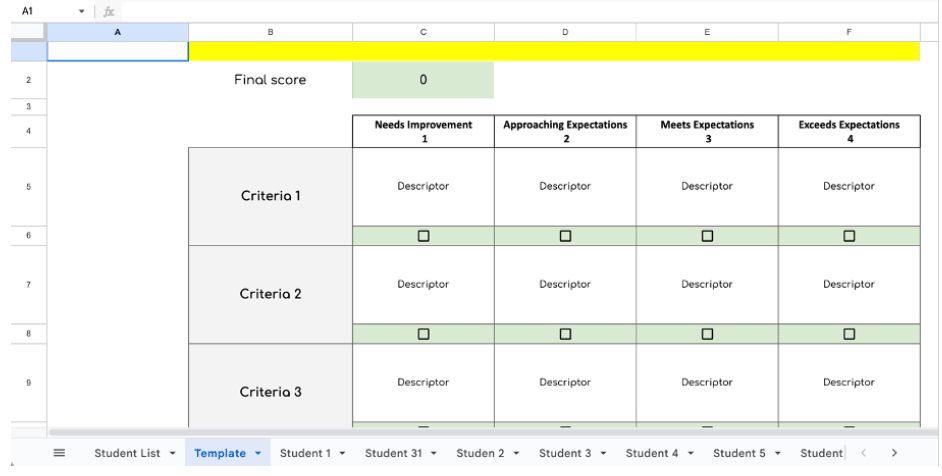
specialist [15] and consists of a Google Sheets document with a blank four-point rubric, as shown
in Figure 1 below. The template shows different criteria, a space for each criterion to add a
description, and several tabs: a student list tab and individual student tabs. Any
changes made to the template tab will also apply to all the students' tabs. In this
way, one tab can be used for each student.
Figure 1
Google Sheets four-point rubric template. The “Template” tab shows example criteria
(Criteria 1–3) and four performance levels (Needs Improvement, Approaching Expectations,
Meets Expectations, Exceeds Expectations) with editable descriptors and checkboxes
for scoring. A “Final score” cell at the top summarizes the selections.
Using the template as a starting point, I adapted it to fit the rubric I developed
for the assignment in 2021*.
Adapting the rubric to the Google Sheets format was straightforward and took a few
hours, completed in a single work session. This process involved customizing the original
rubric template to align with specific learning objectives and assessment criteria
of the EBM assignment. Key steps included revising criterion descriptions to reflect
EBM proficiency, calibrating grading for the different criteria, and sharing the rubric
with other medical educator librarians at the institution for feedback prior to implementation.
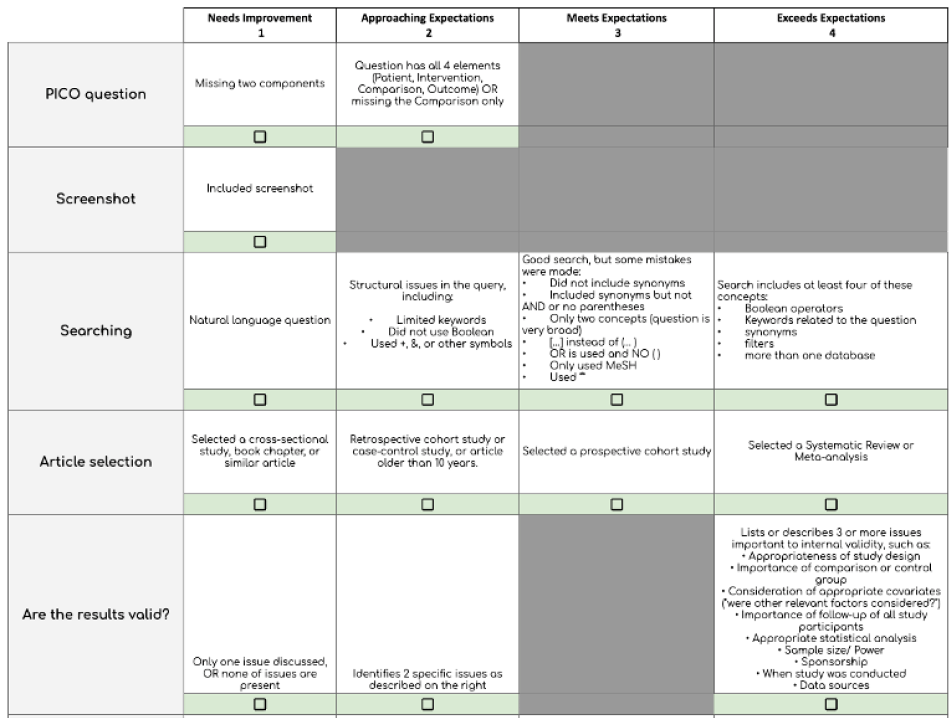
A snapshot of the adapted rubric can be seen below, in figure 2. The full rubric is also shared online†.
Figure 2
Adapted Google Sheets showing a portion of the rubric. The rubric lists EBM-specific
criteria (e.g., PICO question, screenshot, searching, article selection, and validity
of results) in rows and four performance levels (Needs Improvement, Approaching Expectations,
Meets Expectations, Exceeds Expectations) in columns, each with detailed descriptors
and checkboxes to guide scoring.
In parallel with the rubric development, I built a document containing standardized
feedback sentences addressing common learning needs. For example, if students used
different symbols (like &, +) to connect keywords in PubMed, or if they mention the
results without informing the measure of association or statistical significance,
I compiled reusable feedback statements. This allowed me to maintain personalized
feedback while improving grading efficiency for common patterns.
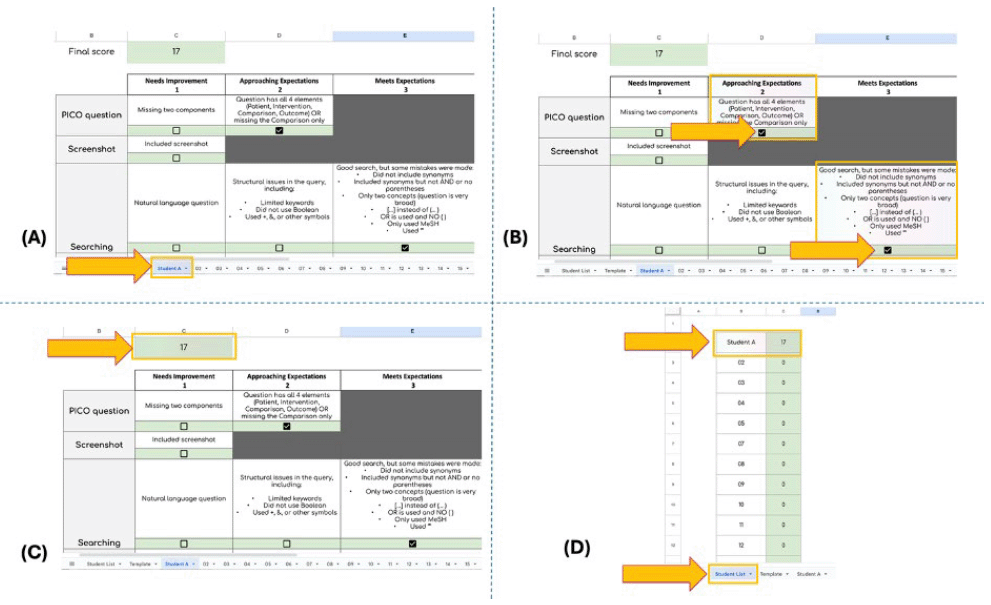
The step-by-step use of this rubric is illustrated in Figure 3. First, one can enter the name of the student they are grading for a particular tab,
for example “Student A” (A). Next, the assessor can checkmark the box that best matches
the student performance (B). This will lead to an automatic score, as shown in (C).
Finally, in the first tab named “Student list,” the name and grade of the student
is automatically updated (D), allowing for assessors to quickly gather a list of all
graded assignments.
Figure 3
Example workflow for using the rubric in Google Sheets. (A) The assessor selects an
individual student tab (e.g., “Student A”). (B) The appropriate checkbox is marked
for each criterion to reflect the student’s performance. (C) The overall “Final score”
is calculated automatically on the student’s rubric tab. (D) In the “Student List”
tab, the student’s name and final score are automatically updated, creating a cumulative
list of graded assignments.
Following the grading step, I would provide narrative feedback by selecting and adapting
sentences from the standardized feedback document as needed. Thus, the rubric handles
the scoring aspect automatically but still requires human input for personalized feedback,
which is why I refer to this rubric as semi-automated. Appendix B shows an example of one graded assignment feedback (preserving the student submission).
Measures and Results
For both cohorts, I kept a log of total time spent assessing student assignments.
This log contained the date, the length of the work session, and how many assignments
were graded in that session (for example, 3/21/2024, 10 assignments, 51 min). Time
was tracked using a digital stopwatch app, noting start and end times. A session is
described as a focused and uninterrupted block of time where the only activity performed
by the author was grading. To minimize interruptions, email and work chat applications
were closed, and the phone was put in silent mode. If an interruption occurred mid-grading,
the timer was paused. If a break was needed, the session was ended and a new session
was started after returning to grading. Brief transitions between assignments (e.g.,
opening the next file) were included in the session time. Appendix C contains the data logs for both cohorts.
With the log for the manual feedback and the semi-automated feedback cohorts, I measured
the average grading time for each assignment, and the difference between each cohort.
The table below shows the results for each cohort.
Table 1
Results
|
Manual feedback (2023) |
Semi-automated feedback (2024) |
| Assignments (n) |
80 |
69 |
| Time (min) |
561 |
353 |
| Average time per assignment (min) |
7 |
5 |
As shown in the table above, for the 2023 cohort (manual feedback), 80 students completed
the assignment at the time of grading, and the average grading time was seven minutes.
For the 2024 cohort (semi-automated feedback), 69 students completed the assignment
at the time of grading, and the average grading time was five minutes. These results
show a 30% reduction in grading time with the use of this rubric.
Ethical considerations
According to the NYU Langone Health IRB, this study constitutes a quality improvement
project and is, therefore, exempt from review. No student-specific data was collected.
DISCUSSION
The key finding of this case report was that there was a 30% reduction in grading
time with the semi-automated rubric. This is a low-cost, easy to adapt, and easy to
implement intervention which can result in time saved when grading assignments and
quizzes, helping reduce educator workload. Streamlining grading can, in turn, help
alleviate some of the institutional and administrative barriers related to time constraints,
as discussed in the background section.
This intervention may also benefit students. By decreasing the workload, educators
can hopefully provide feedback in a timely manner so that students can use that feedback
to improve performance. Another potential benefit is ensuring consistency of assessment
across students and cohorts. However, no outcomes related to student perception were
measured in this implementation and warrant future investigation.
An important consideration when implementing new tools is their sustainability. Since
this is a Google Sheets format, it is easy to maintain, and it can be shared with
fellow educators with ease. It is advisable to review the content and update it, if
necessary, prior to reusing the rubric. Fortunately, with the template format, all
student tabs are updated automatically, simplifying the process.
The potential for adapting and implementing similar automated rubrics extends beyond
EBM courses to other disciplines. Automated rubrics can enhance efficiency in grading
across various educational settings, including nursing, pharmacy, and other health
science courses.
There are limitations to this case report, as it was not structured or conducted as
empirical research. The primary limitation is the reliance on a single grader's experience,
which may not generalize across different educators or institutional contexts. Different
educators may have different baseline grading speeds, rubric interpretation approaches,
and feedback styles, meaning that the 30% reduction observed may not be representative
of other educators’ experience. With this, it is difficult to affirm that these differences
would remain in the same magnitude in other scenarios.
One potential confound is that grading efficiency improvements could result from the
grader becoming more familiar with the assignment rather than the assistance of the
rubric. However, I argue that this is unlikely to be a significant factor in this
case: the assignment was first created in 2021 and had been used for two prior cohorts
before the control cohort in 2023. By the time of the control cohort assessment, I
had already graded this specific assignment over two hundred times. While some minimal
practice effects cannot be completely ruled out, the magnitude of the efficiency improvement
observed (30% reduction) is unlikely to be explained by familiarity gains alone.
This case report measured only grading time reduction and did not assess student outcomes
such as time to feedback delivery, student satisfaction with feedback, perceived consistency
or helpfulness of feedback, or impact on performance after the assignment. While consistency
is a theoretical benefit of standardized rubrics, I did not measure whether feedback
was more consistent across students or across cohorts. In addition, this rubric was
designed for a structured, whole-task EBM assignment for preclinical students. The
time savings may not generalize to different assignments or different formats (e.g.,
presentations, clinical evaluations).
Future research on this subject could focus on assessing different assignments or
quizzes with multiple graders to establish inter-rater reliability. Researchers should
consider other outcomes, such as student satisfaction with feedback (including whether
the combination of standardized and personalized elements affects perceived utility,
personalization, or satisfaction) student performance on subsequent assignments, or
faculty satisfaction with the assessment process. The initial time investment required
to develop and calibrate similar rubrics should also be documented to provide a more
complete picture of the process. Finally, future studies should incorporate larger
sample sizes and diverse educational settings, in addition to tracking individual
assignment grading time to assess where automation is most or least useful.
*As the rubric was developed before planning this documentation, specific details about
different iterations, and the rubric development process were not recorded.
†Adapted Google Sheets Rubric: https://bit.ly/2025-MLA
DECLARATION OF GENERATIVE AI AND AI-ASSISTED TECHNOLOGIES IN THE WRITING PROCESS
During revision, I used Claude (4.5 Sonnet, Anthropic) through NYU Langone Health’s
HIPAA-compliant AI Studio to help restructure the manuscript. The AI tool assisted
with reorganizing the background section and refining language for clarity. I critically
reviewed, revised, and adapted all AI-generated suggestions. I take full responsibility
for the manuscript's content.
DATA AVAILABILITY STATEMENT
Data reported in this article are provided in Appendix C.
SUPPLEMENTAL FILES
Appendix A
Appendix B
Appendix C
REFERENCES
1. Mai DH, Taylor-Fishwick JS, Sherred-Smith W, Pang A, Yaworsky J, Whitty S, Lafever A, McIlvain C, Schmitt M, Rogers-Johnson M, Pace A, Dobrian AD. Peer-Developed Modules on Basic Biostatistics and Evidence-Based Medicine Principles
for Undergraduate Medical Education. MedEdPORTAL. 2020 Nov 24;16:11026. DOI: http://dx.doi.org/10.15766/mep_2374-8265.11026
 .
.
2. Swanberg SM, Mi M, Engwall K. An Integrated, Case-Based Approach to Teaching Medical Students How to Locate the
Best Available Evidence for Clinical Care. MedEdPORTAL. 2017 Jan 19;13:10531. DOI: http://dx.doi.org/10.15766/mep_2374-8265.10531
.
3. Minuti A, Sorensen K, Schwartz R, King WS, Glassman NR, Habousha RG. Librarians Flip for Students: Teaching Searching Skills to Medical Students Using
a Flipped Classroom Approach. Med Ref Serv Q. 2018 Apr-Jun;37(2):119–131. DOI: http://dx.doi.org/10.1080/02763869.2018.1439184
.
4. Maggio LA, Capdarest-Arest N. Practising evidence-based medicine (EBM): a descriptive analysis of medical students'
whole-task EBM assignments. Evid Based Med. 2017 Apr;22(2):41–44. DOI: http://dx.doi.org/10.1136/ebmed-2016-110593
.
5. Nicholson J, Plovnick C, van der Vleuten C, de Bruin ABH, Kalet A. Librarian-Led Assessment of Medical Students' Evidence-Based Medicine Competency:
Facilitators and Barriers. Perspect Med Educ. 2024;13(1):160–168. DOI: http://dx.doi.org/10.5334/pme.1145
.
6. Natesan S, Jordan J, Sheng A, Carmelli G, Barbas B, King A, Gore K, Estes M, Gottlieb M. Feedback in Medical Education: An Evidence-based Guide to Best Practices from the
Council of Residency Directors in Emergency Medicine. West J Emerg Med. 2023 May 5;24(3):479–494. DOI: http://dx.doi.org/10.5811/westjem.56544
.
7. Henderson M, Ryan T, Phillips M. The challenges of feedback in higher education. Assessment & Evaluation in Higher Education. 2019;44(8):1237–1252. DOI: http://dx.doi.org/10.1080/02602938.2019.1599815
8. Muellenbach JM, Houk KM, D ET, Rodriguez B. Integrating Information Literacy and Evidence-Based Medicine Content within a New
School of Medicine Curriculum: Process and Outcome. Med Ref Serv Q. 2018 Apr-Jun;37(2):198–206. DOI: http://dx.doi.org/10.1080/02763869.2018.1439225
.
9. Aronoff N, Stellrecht E, Lyons AG, Zafron ML, Glogowski M, Grabowski J, Ohtake PJ. Teaching evidence-based practice principles to prepare health professions students
for an interprofessional learning experience. J Med Libr Assoc. 2017 Oct;105(4):376–384. DOI: http://dx.doi.org/10.5195/jmla.2017.179
.
10. Menard L, Blevins AE, Trujillo DJ, Lazarus KH. Integrating evidence-based medicine skills into a medical school curriculum: a quantitative
outcomes assessment. BMJ Evid Based Med. 2021 Oct;26(5):249–250. DOI: http://dx.doi.org/10.1136/bmjebm-2020-111391
.
11. Cyrus JW, Zeigen L, Knapp M, Blevins AE, Patterson B. A scoping review of librarian involvement in competency-based medical education. J Med Libr Assoc. 2025 Jan 14;113(1):9–23. DOI: http://dx.doi.org/10.5195/jmla.2025.1965
.
12. Consortium of Accelerated Medical Pathway Programs (CAMPP). Making medical education more efficient and less expensive [internet]. [cited 30 Sept 2025]. https://www.acceleratedmdpathways.org/.
13. Ogrinc G, Armstrong GE, Dolansky MA, Singh MK, Davies L. SQUIRE-EDU (Standards for QUality Improvement Reporting Excellence in Education):
Publication Guidelines for Educational Improvement. Acad Med. 2019 Oct;94(10):1461–1470. DOI: http://dx.doi.org/10.1097/acm.0000000000002750
.
14. Lim J, Reiser RA, Olina Z. The effects of part-task and whole-task instructional approaches on acquisition and
transfer of a complex cognitive skill. Educational Technology Research and Development. 2009;57:61–77. DOI: http://dx.doi.org/10.1007/s11423-007-9085-y
.
15. Permiakov E. Cut your grading time in half with automated rubrics. YouTube: 2020, January. [cited 30 Sept 2025]. https://youtu.be/EyYktDQ7BNE?si=FVOAIQUeHary0pif.
Juliana Magro, 1 juliana.magro@nyulangone.org, Assistant Curator & Undergraduate Medical Education Librarian, NYU Health Sciences
Library, NYU Grossman School of Medicine, NYU Langone Health, New York, NY
© 2026 Juliana Magro
This work is licensed under a Creative Commons Attribution 4.0 International License.
Journal of the Medical Library Association, VOLUME 114, NUMBER 3, July 2026