PRISMA-ScR flow diagram
Dean Giustini1, Alexandre Amar-Zifkin2, Eileen Chen3, Janice Y. Kung4
doi: http://dx.doi.org/10.5195/jmla.2026.2406
Volume 114, Number 3: 191-207
Received 01 2026; Accepted 04 2026
ABSTRACT
Objectives:
To synthesize and map literature on automated indexing of the biomedical literature, with a focus on the Medical Text Indexer (MTI) at the National Library of Medicine (NLM). We review the drivers, benefits, and challenges of automated indexing, evolution of the MTI from 2000–2025, and impacts on information retrieval in MEDLINE.
Methods:
We conducted a scoping review following the JBI Manual for Evidence Synthesis and reported findings using PRISMA-ScR and PRISMA-S. We searched several bibliographic databases, key journals, conference proceedings, and grey literature sources, with no restrictions on language or study design. Eligible publications were published 2000–2025 and focused on MTI development. Screening, data charting, and thematic analysis were conducted by multiple reviewers.
Results:
We included 64 publications, with most originating from the United States (n=53, 83%) and five from Canada (8%). Study methods included evaluation or comparative studies (65%), qualitative descriptions (25%), and mixed methods (11%). MTI evolved from a rules-based recommendation tool in 2002 to the neural network–based MTIX in 2024. Despite numerous enhancements to the MTI, human curation remains necessary for approximately one-third of records to correct inaccuracies, capture missed concepts, and address errors arising from figurative language or algorithmic biases.
Conclusions:
This review synthesizes twenty-five years of MTI research (2000–2025). Despite reduced indexing times and a markedly improved algorithm, the MTIX has not yet achieved full equivalence to human indexing. Our findings suggest searchers should watch for algorithmic ambiguities in their MEDLINE searching and adapt accordingly. Health sciences librarians should work with stakeholders, including authors, to shape future algorithmic indexing methods, outputs, evaluation and research.
Keywords: Automated indexing; Algorithmic indexing; Medical Text Indexer (MTI); Medical Subject Headings (MeSH); PubMed/MEDLINE Searching; National Library of Medicine (NLM); Neural Network, Search Filters.
The National Library of Medicine (NLM) has conducted research into automated and semi-automated indexing since the 1980s [1, 2]. NLM’s past indexing achievements are outlined in A History of the National Library of Medicine, and include John Shaw Billings’ Index Medicus in 1879, print indexes of the 20th century, and MEDLARS in the 1960s – NLM’s first computerized system for MEDLINE indexing and information retrieval [3].
Automated indexing has been defined as “the assignment of index terms to documents by means of a computer,” with some human intervention, or none at all [4, 5]. The term covers a spectrum of computational approaches from semi-automated methods with human oversight to fully automated processes [4, 5]. These approaches typically rely on algorithms, natural language processing (NLP), and machine learning models to perform automated indexing [5] (see Appendix A—Glossary of terms and abbreviations).
In response to an increasing volume of publications, NLM began testing text mining and NLP approaches in the 1990s [6, 7] to assist indexers in assigning medical subject headings (MeSH) to MEDLINE records. In 2002, NLM’s Indexing Initiative introduced the Medical Text Indexer (MTI) to human indexers as a MeSH recommendation tool. MTI recommendations were integrated into the Data Creation and Maintenance System (DCMS) and used by human indexers to evaluate and select the most appropriate MeSH terms for each article [8]. MTI was an automated tool that supported, rather than replaced, the expertise and oversight of highly skilled indexers [4].
In 2021, NLM announced a major transition to the rules-based MTIA (Auto) algorithm to automate MEDLINE indexing, with human curation “applied as indicated” to ensure accuracy and completeness of records [9]. By 2024, NLM had implemented the MTIX (Medical Text Indexer–Next Generation), which uses convolutional neural network technology, for fully automated indexing with curation staff reviewing MEDLINE records from high-impact subject areas, and frequently searched topics [10].
Despite decades of MTI development and an extensive body of research examining its enhancements, no prior scoping or systematic review has synthesized the evidence on MTI-related research [4]. This scoping review represents the first systematic effort by health sciences librarians (HSLs) to identify, map, and synthesize this literature. We trace the evolution of the MTI by analyzing the drivers, benefits, and challenges of automated indexing, as well as its downstream effects on MEDLINE searching and its impact on indexing accuracy and completeness. By situating the MTI within the broader historical and technological development of automated indexing, this review offers a focused, original contribution to the medical library and information science literature.
Four (4) research questions guided our review:
Our scoping review methods were informed by Arksey and O’Malley’s 2005 framework [11], Levac et al’s 2010 update [12] and the JBI Manual for Evidence Synthesis (Scoping Reviews chapter) [13]. We developed an a priori protocol and shared it publicly via the Open Science Framework (OSF) in January 2025 [14]. We report our searches using PRISMA-S [15] and our review using PRISMA ScR [16].
We identified publications through multiple electronic search strategies. On 15 January 2025, we searched MEDLINE (Ovid), Embase (Ovid), CINAHL, Library Information Science and Technology Abstracts (LISTA) via EBSCO, Library and Information Science Abstracts LISA (ProQuest), Scopus, and Web of Science Core Collection (seven files: 1) Science Citation Index Expanded, 2) Social Sciences Citation Index, 3) Arts and Humanities Citation Index, 4) Conference Proceedings Citation Index, 5) Science, Conference Proceedings Citation Index, 6) Social Sciences and Humanities and 7) Emerging Sources Citation Index) [14].
To locate grey literature, we searched Figshare, Zenodo, ArXiv and medRxiv, the Open Science Framework (OSF), the NLM Technical Bulletins, available transcripts of PubMed Office Hours and the website of NLM’s Lister Hill National Center for Biomedical Communications (LHNCBC). We set up and received weekly alerts from 15 January 2025 to 15 October 2025 in Medline (Ovid), Embase (Ovid), LISTA (EBSCO) and the Web of Science (WoS) [14].
We developed two main concept blocks for our MEDLINE searches, which were combined using Boolean operators AND OR. No limits were applied for study design, language, or publication date [14]. The strategy was translated for use in the other biomedical and library science databases as specified in our protocol, and appropriate controlled terms were identified as needed. All search strategies and database strings, including details of our grey literature searching, are reported in Appendix B.
To increase the likelihood of identifying relevant publications not captured through database searching, we conducted targeted searching of the electronic table of contents of seven (7) key journals in health sciences librarianship (2000–2025): the Journal of the European Association for Health Information and Libraries, Evidence Based Library and Information Practice, Journal of the Canadian Health Libraries Association, Journal of the Medical Library Association, Journal of eScience Librarianship, Medical Reference Services Quarterly, and Hypothesis. These journals were selected based on their relevance to the field and their likelihood of publishing on MEDLINE indexing and its effects on information retrieval. Targeted searching of key journals is particularly important in this domain of health sciences librarianship where inconsistent indexing, evolving terminology, and delays in database inclusion may limit retrieval through standard search strategies. (For specific dates, volumes, and issues searched, see Appendix B.)
To ensure we did not miss any unpublished research, we searched all available electronic conference proceedings at three health sciences libraries’ websites: the Canadian Health Libraries Association (CHLA/ABSC), European Association for Health Information and Libraries (EAHIL), and the Medical Library Association (MLA). (For the specific conference proceedings websites, and dates searched, see Appendix B.)
We supplemented our bibliographic database search by reference harvesting. We identified seed papers (n=35) using MEDLINE (Ovid), Google Scholar and Web of Science [14], and searched their references for additional relevant publications. When locating relevant material, we added the full-text into our grey literature folder for eventual loading into Endnote and Covidence.
We performed initial deduplication of records in Endnote using the Bramer method [17], then imported records into Covidence for additional deduplication and to begin the screening process. Zotero [18] was used for overall citation management and to format references in the manuscript.
Two reviewers independently screened titles and abstracts against inclusion criteria, with discrepancies resolved through discussion. We considered all data sources (peer-reviewed and non-peer-reviewed) and methods (case reports, mixed methods, qualitative, and quantitative). We included publications when they addressed the following:
We excluded publications published before 2000, or that did not discuss automated indexing using the MTI.
After deduplication in EndNote, citations were imported into Covidence, where any remaining duplicates were removed. Two pairs of reviewers independently screened the records using predetermined inclusion criteria. Screening was not blinded to author or journal information. Most titles and abstracts were in English; for two non-English publications, two team members with the requisite language skills (French and Japanese) translated the content to assess their eligibility. Any disagreements were resolved through discussion at regular team meetings until consensus was reached.
Publications selected for full-text review were uploaded to Covidence. Any disagreements were resolved through team discussion, with all decisions documented throughout the process.
A standardized data extraction form was developed and pilot-tested in Google Sheets to ensure consistency and completeness. The form was iteratively refined following the pilot phase to ensure that all variables relevant to analysis were captured in a structured and reproducible way. The final form included fields for full citation details, country of origin, publication type, study aims and methods, the specific version of MTI under evaluation, and how each publication addressed each of the review questions (RQs).
For each variable, multiple data points were captured rather than any single summary judgment. Reviewers recorded descriptive information (e.g., MTI version, year of publication, study design), along with qualitative and quantitative findings related to indexing performance, errors, and evaluation methods. Structured fields and open-text fields were also used to capture key findings, reported outcomes, and noteworthy aspects of each publication, including any narratives about the underlying computer technologies evaluated (e.g., rule-based, machine learning, or hybrid approaches).
Data extraction was conducted independently by two reviewers for all included studies to enhance reliability. Discrepancies between reviewers were documented and resolved through discussion with a third reviewer and, when necessary, consultation with the entire team to reach consensus. This process resulted in a set of agreed-upon data points for each study. All extracted data were then compiled into a master spreadsheet, which enabled both descriptive analysis and thematic synthesis across studies.
We identified publications and examined them using the thematic analysis techniques by Braun and Clarke [19, 20], supplemented with further guidance from the framework by Thomas and Harden [21]. For each publication, we examined how the four research questions were addressed, documented the specific version of MTI evaluated based on the year of publication or the authors explicitly mentioning the version under evaluation.
The publications were categorized by publication type and study method using MeSH publication types (e.g., “Journal Article,” “Conference Paper”) and study design terms (e.g., “Comparative Study,” “Evaluation Study”). Two additional categories - “Mixed Methods” and “Qualitative Descriptions” - were applied based on definitions from Sandelowski [22] and Schoonenboom et al. [23] (Appendix C).
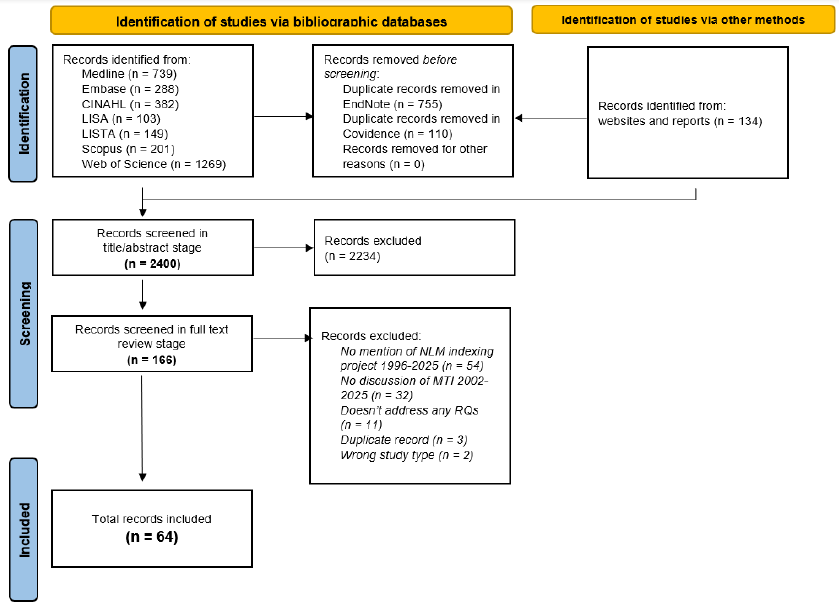
Our searches yielded a total of 3,265 records from all searching in the bibliographic databases, journals, grey literature, and website searches, including reference harvesting and citation tracking. After removing 755 duplicates in EndNote and Covidence (which identified an additional 110 duplicates), 2,400 records remained for title and abstract screening. Of these, 2,234 were excluded, leaving 166 full-text publications assessed for eligibility. Following full-text review, 102 were excluded, resulting in 64 publications that met our inclusion criteria [9, 10, 24–85] (See Figure 1).
Figure 1PRISMA-ScR flow diagram
Summaries of our 64 publications and their key findings are presented in the table in Appendix H [9, 10, 24–85].
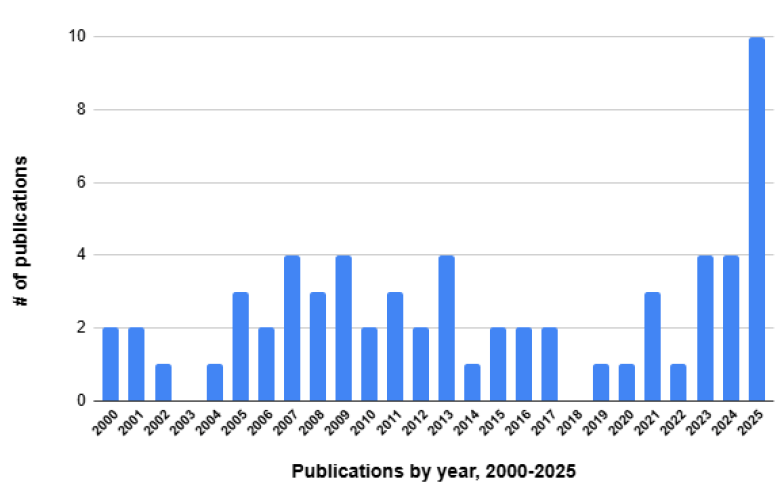
All 64 publications were published in English and spanned a 25-year period from 2000 to 2025 (see Figure 2). They were distributed as follows: 2000–2009 (n = 22, 34%), 2010–2019 (n = 19, 30%), and 2020–2025 (n = 23, 36%). Volume peaked in 2025 with ten publications (16%).
Figure 2Publications by Year, 2000–2025
The US accounted for 83% of the included publications (n = 53) with NLM researchers contributing two-thirds of the total number (n = 42, 66%). NLM affiliation was determined by examining the institutional affiliations of first authors and recording this information in our data extraction form. First authors were classified as NLM-affiliated when their listed institution explicitly referenced NLM or one of its informatics or indexing divisions (e.g., NLM Index Section or LHNCBC). Full details are provided in Appendix D.
Canadian researchers contributed five publications (n = 5, 8%), examining topics such as MTI’s impact on check tags, search filters, and the indexing of minority groups. Nearly a dozen publications (n = 11, 17%) were published outside the US. In Europe, two publications originated from Portugal (n = 2, 3%) and one from Spain, with single publications from the United Kingdom and Denmark. One additional publication was conducted in Brazil.
Conference papers comprised 44% of publications, followed by journal articles at 41%. Together, these formats accounted for 85% of research outputs (Table 1).
Table 1Distribution of Publication Types
| Publication Type | Count | Percentage |
|---|---|---|
| Conference Paper | 28 | 44% |
| Journal Article | 26 | 41% |
| Report | 6 | 9% |
| Preprint | 2 | 3% |
| Poster | 1 | 2% |
| Commentary | 1 | 2% |
| Total | 64 |
Six NLM publications (9%) provided authoritative updates on MTI enhancements, including implementation of the MTIA in 2022 and MTIX in 2024. Two publications (3%), retrieved from arXiv, reflected emerging trends in open science and rapid dissemination of machine learning research. One poster published a checklist for authors to ensure accurate indexing in the algorithmic era [24]. A single commentary by Neveol and colleagues [64] evaluated previous research by Trieschnigg et al. [66], noting that experiments with a ‘Nearest Neighbor’ algorithm were not reproducible, and that their findings did not align with previously published work about automated indexing.
Publications were from 16 journal outlets in total (Appendix E). The leading outlet was the Journal of the Medical Library Association (n = 4, 6%), followed by three each (5%) in BMC Bioinformatics, Journal of Biomedical Informatics, and Research in Social and Administrative Pharmacy. Bioinformatics and JAMIA Open each published two (3%). The remaining 10 journals span a diverse range of fields, including bioinformatics, library and information science, and the health professions. The American Medical Informatics Association (AMIA) conferences accounted for 18 publications (28%), while CEUR Proceedings Workshops contributed two (3%) and the Association for Information Science and Technology (ASIS&T) contributed one (2%). Six publications (9%) originated from the Biomedical Semantic Indexing and Question Answering (BioASQ) competition in 2013 [86].
We classified publications into four methodological categories. A majority of publications (n = 34, 53%) met the MeSH definition of an evaluation study, examining the effectiveness or utility of processes, personnel, or systems. Sixteen (25%) were qualitative descriptions. Comparative studies (n = 7, 11%) assessed outcomes across different techniques or approaches, while seven (11%) employed mixed methods (Appendix E).
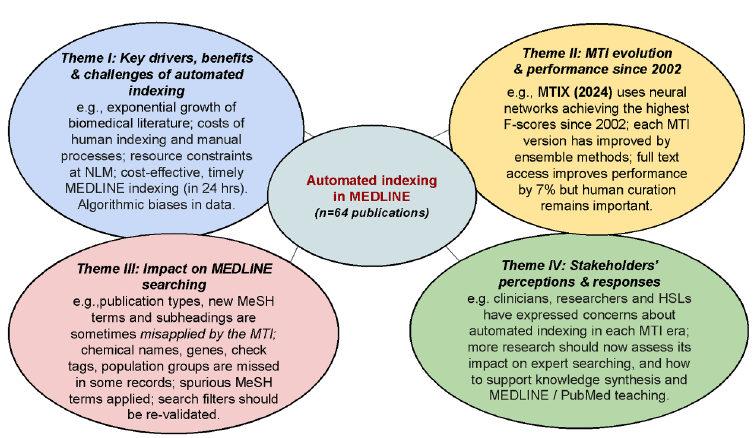
We organized our findings into four analytical themes, namely: (1) key drivers, benefits, and challenges of automated indexing; (2) the evolution and performance of the MTI since 2002; (3) impact on MEDLINE searching; and (4) stakeholders’ perceptions and responses to automated indexing in MEDLINE. We summarize key points in Figure 3.
Figure 3Key Themes Based on Four (4) Research Questions
Key drivers toward automated indexing included the exponential growth of publications in biomedicine [62, 74], increased volume of articles requiring MEDLINE indexing [26, 79], and the substantial investments - particularly in training and retraining indexers - needed to perform traditional manual indexing [25, 28, 35, 83].
Two key benefits of automated indexing were reduced indexing time and lower administrative costs [34, 65, 82]. Several publications highlighted indexing backlogs and dwindling resources at NLM as drivers of automation [52, 68], noting that human indexing was often slow and labor-intensive, even with considerable expertise, and unable to keep pace with rising indexing demands [25, 40, 46, 58]. The urgent need to implement automated methods was further illustrated by the backlogs and the growing number of new MEDLINE records, reaching 1.4 million in 2022 [4, 35].
Multiple publications reported concerns about the accuracy, consistency, and completeness of records [36, 55, 77], precision errors [38, 68, 76], and missed concepts or inappropriate check tags [26, 37]. Other challenges with automated indexing were MTI’s difficulty in interpreting figurative language and its misinterpretation of metaphors in titles and abstracts [10]. For example, the MTIX incorrectly assigned the MeSH term Malus (apple) to 135 of 1,705 records (8%) in which “apple” was used figuratively or as part of a name or term [33].
Early MTI testing in 2002 identified limitations in handling acronyms [60, 81], abbreviations, chemical and gene names [71], and numerical expressions [81]. Although NLM has since refined the MTI to improve the indexing of genes, proteins, and frequently searched topics in PubMed [9], these developments have not fully resolved underlying issues. By 2023, HSLs reported that the MTI perpetuated gender and equity biases, including a tendency to favor the male check tag over the female [37].
Several publications demonstrated that indexing outputs based on a publication’s full text, or portions thereof, improved MTI’s overall F-scores [54, 76]. F-scores represent the weighted mean of precision and recall and are expressed as a single numerical value or percentage [39]. However, NLM does not maintain subscriptions to all journals indexed in MEDLINE, and not all MEDLINE journals permit text mining of full text [73].
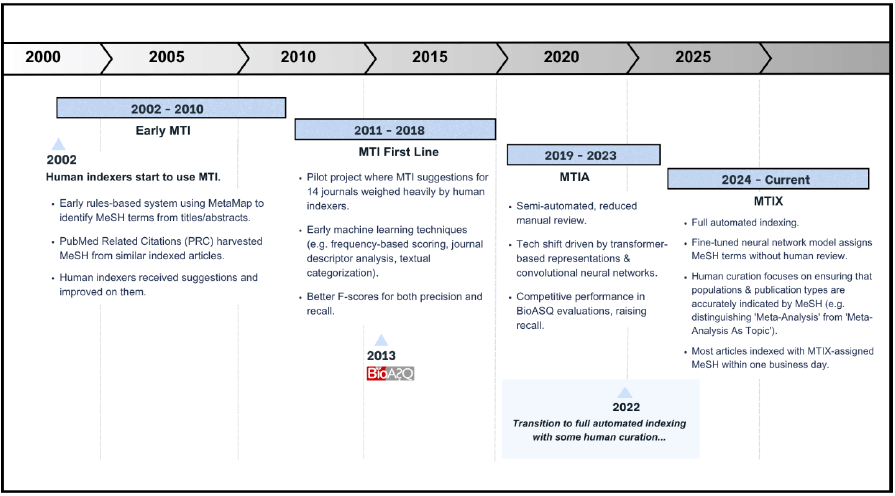
Several key publications traced the development and evolution of automated indexing in MEDLINE highlighting numerous key enhancements to the MTI (2002): 2011 (MTIFL), 2019 (MTIA), and 2024 (MTIX). A timeline of MTI’s evolution is shown in Figure 4.
Figure 4Timeline of MTI’s Evolution from 2002-Present
Across publications, new technological innovations were tested by NLM, iterating and improving the rules-based, deterministic system of 2002 [63] to the neural network algorithm of 2024 [10]. Rules-based approaches between 2002 and 2022 were error-prone and required human intervention [37, 73], often missing synonyms and struggling with emerging terminology [42]. MTIA projects reported between 2010 to 2020 explored ensemble approaches to improve indexing outputs [43, 72], combining dictionary-based rules, natural language processing, and supervised learning. Ensemble methods were shown to consistently outperform single-approach systems [41].
The first MTI had two core components: MetaMap and PubMed Related Citations (PRC) [79]. MetaMap identified concepts in text by mapping them lexically to the Unified Medical Language System (UMLS) [81, 82]. UMLS then mapped text to closely related MeSH terms using Restrict to MeSH [79], an algorithm that identified semantic relationships between concepts. To support MetaMap, PRC searched for existing indexed records similar in content to the item being indexed, based on the nearest neighbors (k-NN) algorithm [56, 81]. MTI integrated outputs from both components, extracted candidate MeSH terms, and applied weighting and post-processing to generate final indexing recommendations. NLM indexers had the option to use MTI recommendations or not based on their judgment; in fact, some experienced indexers ignored them altogether or used them to ensure they didn’t miss major topics [46].
In 2011, MTIFL became the first-line indexer for 14 journals, expanding to 51 by 2015 [39, 47, 49]. MTIFL nearly doubled its precision of MeSH recommendations for human indexers by using new precision and recall filters.
The MTIFL incorporated Journal Descriptor Indexing (JDI) and journal subsets to assign weights to candidate MeSH terms [63, 74, 85]. Bayesian classifiers trained on approximately four million MEDLINE citations were used to predict 127 discipline categories (e.g. Cardiology, Medical Genetics) [74]. By leveraging the statistical associations among journal-level metadata, textual features, and MeSH terms, JDI achieved high levels of precision (82–97%) and recall (75–92%). Improvements to the MTIFL marked the first of many small steps toward fully automated indexing [39].
In 2019, NLM implemented a pilot of the MTIA starting with some journals, which marked a major step towards fully automated indexing [9, 40, 58]. MTIA’s development drew on lessons learned from the BioASQ Semantic Indexing Challenges and refinements from two short-lived initiatives, MTI Review (MTIR) and MTI Comment On (MTIC) [39]. By 2021, NLM had expanded the MTIA to cover 40% of journals indexed in MEDLINE, and by 2022 it was central to the transition to fully automated indexing [9, 39].
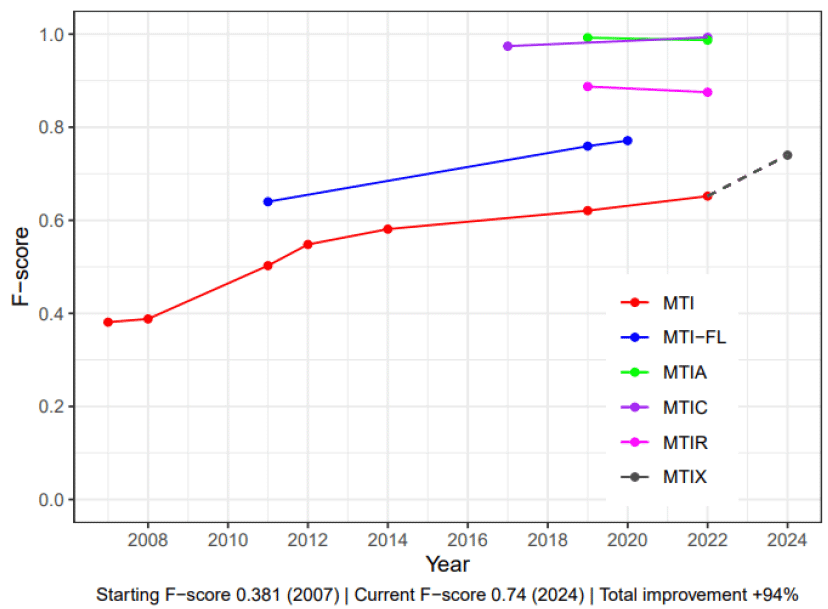
By 2023, processing times had dropped from months to days, and the MTIA was handling most routine MEDLINE indexing [39]. NLM’s adoption of deep learning yielded further performance gains, with F-scores rising from approximately 0.40–0.50 to 0.65–0.75 [9, 10]. Together, these advances in efficiency and scalability enabled NLM to manage indexing workloads that would otherwise have been unsustainable [9, 10].
By 2024, NLM had fully transitioned to the neural network–based MTIX, representing state-of-the-art automated indexing using artificial intelligence (AI). Formal testing of convolutional neural network (CNN) models began in 2012 and continued for a decade [41, 42, 45]. Unlike early MTI systems relying on fixed dictionaries, trigger phrases, and human-crafted rules, MTIX used AI-based neural networks as its main technology [10].
MTIX deployment improved performance for publication types and check tags, two categories with high search impact in MEDLINE [10]. Human curation continues for roughly one-third of all MTIX-indexed articles, focusing on high-impact journals, specialized publication types, and complex or high-demand subjects [10]. MTIX is a machine learning algorithm and needs human curation to learn about any new MeSH terms [10]. Most articles indexed in MEDLINE now appear in PubMed with MTIX-assigned MeSH terms within one business day [4].
Performance evaluations of the MTI algorithms from 2002 to 2025 demonstrate substantial improvement across standard metrics [27]. In several publications, F-scores were reported to have increased from 0.38 in 2007 to 0.74 in 2024 [10, 27, 39]. Early evaluations reported modest performance (F ≈ 0.38–0.58), reflecting a limited balance between sensitivity and specificity, whereas later versions incorporated filtering, ranking, and neural methods that contributed to marked gains for a total improvement of 94%. (MTI’s performance and F-scores from 2007 to 2024 are in Figure 5.)
Figure 5Performance of MTI (2002) to MTIX (2024)
From 2020–2025, NLM continued to integrate deep learning and transformer-based language models to improve automated indexing processes [27, 31, 35]. BERT (Bidirectional Encoder Representations from Transformers) is a neural network model designed for natural language processing, enabling machines to understand text with a human-like contextual awareness [39, 42, 44].
More specific transformer models such as DistilBERT, BioBERT, PubMedBERT, and SciBERT demonstrated strong performance on complex NLP tasks and MeSH prediction, paving the way for more highly scalable, efficient MEDLINE indexing [27, 44]. (See Appendix G for more details on BERT models' features, and their environmental footprint.)
Numerous publications highlighted concerns for MEDLINE searchers, noting several discipline-specific difficulties due to automated indexing and the impact of indexing errors and under-indexing of certain populations and subjects.
Several publications discussed the impact of errors on precision and recall, search filters, and publication types [25, 31, 36, 69, 81] with explicit recommendations to exercise caution in creating search strategies [25, 37]. In light of emerging errors in MEDLINE, HSLs suggested revalidating (or at least testing) previously validated search filters [25].
One publication suggested that HSLs assess changes to MTI-assigned terms, and their impact on mapping features for various topics and interfaces [37]. Another advised HSLs to test subheadings, broader terms in hierarchical trees, and add more free text terms to compensate for missing or ambiguous indexing [25]. Finally, two publications recommended that researchers wanting to improve their articles' discoverability should ensure key concepts are mentioned explicitly in titles and abstracts, even using terminology matching existing MeSH terms [24, 25].
Across publications, several recurring recommendations were identified for both HSLs and researchers. For example, HSLs should critically assess changes to MTI-assigned terms and evaluate their impact on mapping features across topics and MEDLINE search interfaces [37]. In response to limitations in automated indexing, HSLs also recommended the testing of subheadings, exploring broader terms within hierarchical structures, and supplementing searches with additional free-text terms to mitigate missing or ambiguous indexing [25].
In parallel, several publications highlighted the role of authors in improving discoverability, noting that explicitly stating key concepts in titles and abstracts using terminology aligned with MeSH terms will enhance later indexing and allow the MTI to assign them more readily [24, 25]. These findings reflect that, despite advances in automated indexing, searchers and authors are already actively compensating for its limitations.
In three publications, pharmacists reported that their literature was poorly indexed and missed concepts consistently [29, 34, 36]. Researchers noted that the MeSH thesaurus included only 26 pharmacy-specific terms compared to 94 terms for nursing and 145 for dentistry which also contributed to weaker indexing and retrieval outcomes [50].
In genetics and gene-related indexing, specialized approaches were also required [71]. One publication revealed that domain-specific document representations (incorporating gene names and sequence information) produced higher F-scores than generic text-based representations, though performance remained limited in testing [71]. Deep learning models further improved results, with BERT fine-tuning outperforming earlier approaches for gene named entity recognition, while gene normalization to Entrez Gene identifiers remained comparatively more challenging. [31, 71].
Chemical entity recognition similarly required specialized approaches [44]. Evaluation of 11 chemical recognition systems on 200 annotated MEDLINE abstracts found that the SciBERT-Ensemble achieved the highest F-score, while MTI scored the lowest [44]. Since the MTI was not designed for chemical recognition, external chemical entity extractors were needed for adequate performance in chemistry-focused articles [44].
A handful of publications revealed that certain populations and topics were affected by algorithmic indexing errors and under-indexing. Research concerning intersex populations, for example, was shown to be poorly indexed, reflecting gaps and inconsistencies in how such topics are represented in MEDLINE [32]. A newer MeSH term, Overdiagnosis, was shown to be misapplied at times [30], and inaccuracies were observed in indexing patient simulation literature [36]. Across subject areas, publications in pharmacy [29, 34], genetics [71], and allied health [37] were more likely to have fewer, missed, or misassigned MeSH terms. These inconsistencies in MeSH indexing are revealing case studies and reflect and reinforce underlying biases in algorithmic indexing practices noted by Chen et al [37].
When comparing automated indexing of human and animal studies, MTIX-indexed records demonstrated significantly greater accuracy than those records indexed by the MTIA [28]. Consistent with these findings, several publications caution against uncritical application of search filters: for example, the Cochrane Human filter may perform less reliably for records indexed between 2019 and 2024 [26].
Taken together, the evidence highlights systematic gaps in automated indexing across certain populations, topics, and disciplines, underscoring the need for careful evaluation and, where appropriate, supplementary search strategies. NLM’s reliance on statistical approaches, and subsequent expansion into machine learning, has contributed to inheriting and amplifying existing problems and biases in the MTI [37].
To mitigate this persistent issue, increased human curation will be necessary for publications about or involving underrepresented populations and rapidly evolving concepts known to pose challenges for the MTI [33, 37]. Ongoing feedback from HSLs can contribute to a better calibrated system by reporting indexing errors and biases [37], including MeSH assignments that are problematic, harmful, or discriminatory.
In this theme, multiple stakeholders – such as authors, indexers, librarians, pharmacists, and NLM curators and researchers - expressed concerns about automated MEDLINE indexing, particularly its impact on the accuracy, consistency, and completeness of records. Table 2 summarizes their perceptions and how they responded through changes in their practices. We provide more detail about the perceptions of two stakeholder groups internal to the NLM that were not addressed in previous themes: NLM indexers and curators, and NLM researchers and staff scientists.
Table 2External / internal stakeholders’ key perceptions and responses
| External Stakeholders | Key perceptions & responses | Internal Stakeholders | Key perceptions & responses |
|---|---|---|---|
| Authors & Editors [23,29,36] |
|
NLM Indexers [47,65,73,79] |
|
| Health Sciences Librarians (HSLs) [24,25,26,32,33,37] |
|
NLM Curators [31,82] |
|
| Pharmacists [29,34,36,50] |
|
NLM Researchers / Staff Scientists [31,39,44,48,87] |
|
This category includes NLM indexers and curators described as such in included publications; these terms were used interchangeably, and sometimes as distinct descriptors. In several publications, “indexers” refer to professionals responsible for assigning controlled vocabulary terms (e.g., MeSH) to MEDLINE records, whereas “curators” denoted subject specialists who refined algorithms, resolved ambiguities, or addressed domain-specific data quality issues, such as gene or genomic indexing. This conceptual overlap, combined with inconsistent terminology across publications, highlighted the need for clearer role definitions within NLM and in the research literature. Greater conceptual clarity would also strengthen the interpretation of stakeholder perspectives and improve assessment of the perceived impact of automated indexing.
From the outset, NLM’s in-house and contract indexers have provided valuable insights into MTI’s performance. In 2004, 37% of indexers described MTI as “fully helpful,” and 53% as “partially helpful” for assigning MeSH terms to records, while 20% expressed some concerns about mismatched entries and vague terms [79]. By 2007, less-experienced indexers appeared to rely heavily on MTI [73]. Overall, 70–80% of MTI’s top 10 recommendations were utilized by all human indexers [47].
In 2025, specialized indexers, referred to as “curators,” were surveyed to inform NLM’s efforts to improve gene linking from PubMed publications [31]. These curators identified persistent challenges, including textual ambiguity in gene nomenclature and the rapid growth of genomic research during and following the COVID-19 pandemic. Their feedback contributed to enhancements of the GNorm2 algorithm, expanding its coverage to include genes from 135 viral and bacterial species [31].
Researchers and staff scientists at NLM’s LHNCBC have conducted research to address main heading / subheading attachment problems of the MTI [41, 65, 72], incomplete indexing of study populations and publication types [9, 27, 54, 80], and the use of full text to improve performance [49, 52, 53]. Informatics researchers continue to examine the value of crawling the full text, although full-text documents are not always accessible to the MTI [35]. In one publication, automated summaries were used in the MTI as alternatives to full text, but this approach was never integrated [49].
In 2012, NLM scientists recognized that no single automated indexing system performed optimally across all document types and domains [56]. Subsequently, MTI performance was enhanced using a meta-learning framework which combined multiple indexing methods to address challenges such as limited datasets and infrequently used MeSH terms [56]. In publications from 2019 to 2023, staff scientists confirmed the value of combined approaches in achieving high-quality MeSH indexing and improving F-scores [41, 44, 45].
In this review, we identified only one publication that examined indexing quality in a foreign language (French) [78], despite MEDLINE’s inclusion of articles published in nearly 40 languages. Examinations of indexing quality were concentrated in pharmacy, genetics, and public health, and we noted that many medical specialties have not yet conducted discipline-specific evaluations. Investigating mis-indexed records related to racialized and other marginalized groups seems to be a major gap and urgent priority, particularly where outdated, problematic, or racist terminology has been applied [88].
Further research is needed on the temporal dimension of automated indexing and its compounding downstream effects on MEDLINE search filters. Prior to automated indexing, inter-indexer inconsistency posed persistent challenges to quality control [89]. As an increasing proportion of MEDLINE records are now indexed algorithmically, the performance of existing search filters may require systematic revalidation.
To date, no publications have assessed the carbon emissions, energy consumption, water usage or labor impact associated with training or deploying AI-based indexing systems. Given the substantial computational resources required to operate AI technologies [90], future research should evaluate MTIX’s environmental footprint alongside traditional performance metrics. Additionally, qualitative research involving HSLs and other expert searchers are needed to better understand how AI-based indexing is reshaping MEDLINE search strategies and PubMed instruction. Findings from this work could inform training programs and support the development of best practices for HSLs.
This review has some limitations. Despite the number of sources searched, some perspectives may have been overlooked, and we may have missed research that focused on MeSH indexing but did not explicitly mention the MTI. The highly technical nature of some of the computer science and informatics papers presented challenges for us; while we shared our understanding with each other at meetings, created a glossary of terms and a wiki to deepen our machine learning literacies [4], these publications would benefit from closer analysis by domain experts.
We did not assess the quality of publications using formal critical appraisal tools. Although consistent with standard scoping review methods, this limited our ability to make definitive statements about the strength of evidence. Our predominant inclusion of English-language sources, despite including publications that could be translated, may have introduced language bias.
The transition to automated indexing represents one of the most significant changes to MEDLINE in NLM’s 150-year history. While improvements to the MTI from 2000 to 2025 have been transformative, automated indexing systems have not yet achieved full equivalence with human indexing. HSLs will continue to play critical roles in the future of algorithmic indexing, particularly in evaluation, advocacy, and ongoing oversight. Future HSL-led research should focus on supporting evidence synthesis, advancing effective MEDLINE teaching practices, and addressing mis-indexed articles affecting marginalized populations due to algorithmic errors and biases.
Dean Giustini: Conceptualization, methodology, investigation, visualization, writing (original draft), writing (reviewing & editing). Alexander Amar-Zifkin: Conceptualization, methodology, investigation, writing (reviewing & editing). Eileen Chen: Conceptualization, methodology, investigation, writing (reviewing & editing), visualization. Janice Kung: Conceptualization, methodology, investigation, visualization, writing (reviewing & editing). All authors read and approved the final article.
Appendix A: Glossary of Terms and Abbreviations
Appendix B: Search Strategy Development
Appendix C: Definition(s) of Study Methods
Appendix D: Most Cited NLM and Other Researchers (2000–2025)
Appendix F: Study Methods Distribution
Appendix H: Table: Summaries of 64 Publications
1. Humphrey S, Miller N. Knowledge-based indexing of the medical literature: the Indexing Aid Project. J Am Soc Inf Sci. 1987 May;38(3):184–96. DOI: 10.1002/(SICI)1097-4571(198705)38:3<184::AID-ASI7>3.0.CO;2-F.
2. Humphrey SM. MedIndEx system: medical indexing expert system. Inf Process Manag. 1989 Jan;25(1):73–88. DOI: http://dx.doi.org/10.1016/0306-4573(89)90092-7
3. Miles WD. History of the National Library of Medicine: the nation’s treasury of medical knowledge. Washington, DC: United States (US) Government Printing Office; 1992.
4. Giustini D. Automated indexing. In: Knowledge Synthesis (KS) & Artificial Intelligence (AI) Search Wiki [Internet]. Vancouver, Canada.; 2026. Available from: https://wiki.ubc.ca/Automated_indexing
5. Golub K. Automated Subject Indexing: An Overview. Cataloguing & Classification Quarterly. 2021 Nov 17;59(8):702–19. DOI: http://dx.doi.org/10.1080/01639374.2021.2012311
6. McCray AT, Aronson AR, Browne AC, Rindflesch TC, Razi A, Srinivasan S. UMLS knowledge for biomedical language processing. Bull Med Libr Assoc. 1993 Apr;81(2):184–94. Available from: https://pmc.ncbi.nlm.nih.gov/articles/PMC225761/
7. Aronson AR, Rindflesch TC. Query expansion using the UMLS Metathesaurus. Proc AMIA Annu Fall Symp. 1997:485–9. Available from: https://pmc.ncbi.nlm.nih.gov/articles/PMC2233565/
8. Nahin A, Knecht L. Changes to PubMed for 2001 [Internet]. 2001 p. e2. (NLM Technical Bulletin). Report No.: 318. Available from: https://www.nlm.nih.gov/pubs/techbull/jf01/jf01_pubmed_2001.html
9. MEDLINE 2022 Initiative: Transition to Automated Indexing [Internet]. NLM Tech Bull. 2021;(443):9–1. Available from: https://www.nlm.nih.gov/pubs/techbull/nd21/nd21_medline_2022.html
10. MTIX: the Next-Generation Algorithm for Automated Indexing of MEDLINE [Internet]. NLM Tech Bull. 2024;(457):8–8. Available from: https://www.nlm.nih.gov/pubs/techbull/ma24/ma24_mtix.html
11. Arksey H, O’Malley L. Scoping studies: towards a methodological framework. Int J Soc Res Methodol. 2005 Feb 1;8(1):19–32. DOI: http://dx.doi.org/10.1080/1364557032000119616
12. Levac D, Colquhoun H, O’Brien KK. Scoping studies: advancing the methodology. Implement Sci. 2010 Sep 20;5:69. DOI: http://dx.doi.org/10.1186/1748-5908-5-69.
13. Peters M, Godfrey C, McInerney P, Munn Z, Tricco A, Khalil H. 10. Scoping reviews (2020). In: Aromataris E, Lockwood C, Porritt K, Pilla B, Jordan Z, editors. JBI Manual for Evidence Synthesis [Internet]. 2024. Available from: https://doi.org/10.46658/JBIMES-24-09
14. Giustini D, Chen E, Kung J, Amar-Zifkin A. Automated indexing of the biomedical literature in Medline: a scoping review [protocol] [Internet]. Open Science Framework (OSF); 2025. Available from: https://osf.io/g4q8u/
15. Rethlefsen ML, Kirtley S, Waffenschmidt S, Ayala AP, Moher D, Page MJ, Koffel JB; PRISMA-S Group. PRISMA-S: an extension to the PRISMA Statement for Reporting Literature Searches in
Systematic Reviews. Syst Rev. 2021 Jan 26;10(1):39. DOI: http://dx.doi.org/10.1186/s13643-020-01542-z.
16. Page MJ, McKenzie JE, Bossuyt PM, Boutron I, Hoffmann TC, Mulrow CD, et al. The PRISMA 2020 statement: an updated guideline for reporting systematic reviews. BMJ. 2021 Mar 29;372:n71. DOI: http://dx.doi.org/10.1136/bmj.n71.
17. Bramer WM, Giustini D, de Jonge GB, Holland L, Bekhuis T. De-duplication of database search results for systematic reviews in EndNote. J Med Libr Assoc. 2016 Jul;104(3):240–3. Available from: https://pubmed.ncbi.nlm.nih.gov/27366130/
18. Zotero: your personal research assistant [Internet]. Vienna, VA: Corporation for Digital Scholarship; [cited 2026 Jan 7]. Available from: https://www.zotero.org/
19. Ahmed SK, Mohammed RA, Nashwan AJ, Ibrahim RH, Abdalla AQ, M. Ameen BM, et al. Using thematic analysis in qualitative research. J Med Surg Public Health. 2025 Aug;6:100198. DOI: http://dx.doi.org/10.1016/j.glmedi.2025.100198
20. Braun V, Clarke V. Using thematic analysis in psychology. Qual Res Psychol. 2006 Jan;3(2):77–101. DOI: http://dx.doi.org/10.1191/1478088706qp063oa
21. Thomas J, Harden A. Methods for the thematic synthesis of qualitative research in systematic reviews. BMC Med Res Methodol. 2008 July 10;8:45. DOI: http://dx.doi.org/10.1186/1471-2288-8-45.
22. Sandelowski M. Whatever happened to qualitative description? Res Nurs Health. 2000 Aug;23(4):334–40. DOI: 10.1002/1098-240x(200008)23:4<334::aid-nur9>3.0.co;2-g.
23. Schoonenboom J, Johnson RB. How to Construct a Mixed Methods Research Design. Kolner Z Soziol Sozialpsychologie. 2017;69(Suppl 2):107–131. DOI: http://dx.doi.org/10.1007/s11577-017-0454-1.
24. Allen C, Carol H, Riley S, Jennifer D. Developing an Author Checklist to Improve Discovery of Published Articles in the Era of Algorithmic Indexing. 2025; Available from: https://doi.org/10.5281/zenodo.17282091.
25. Amar-Zifkin A, Ekmekjian T, Paquet V, Landry T. Algorithmic indexing in MEDLINE frequently overlooks important concepts and may compromise
literature search results. J Med Libr Assoc. 2025;113(1). DOI: http://dx.doi.org/10.5195/jmla.2025.1936.
26. Askin N, Ostapyk T, Epp C. Filtering failure: the impact of automated indexing in Medline on retrieval of human
studies for knowledge synthesis. J Med Libr Assoc. 2025;113(1):58–64. DOI: http://dx.doi.org/10.5195/jmla.2025.1972.
27. Cid VH, Mork J. Enhancing Automatic PT Tagging for MEDLINE Citations Using Transformer-Based Models. arXiv [Internet]. 2025; Available from: https://arxiv.org/abs/2506.03321.
28. Epp C, Askin N, Ostapyk T. Still a filtering failure? Automated indexing using MTIX versus MTIA and its impact on human study filtering for knowledge synthesis. J Can Health Libr Assoc. 2025 Aug 1;46(2):53–62.
29. Fernandez-Llimos F. Consistency of Medical Subject Headings assignment: a test-retest reliability analysis. Res Social Adm Pharm. 2025 Oct;21(10):784–789. DOI: http://dx.doi.org/10.1016/j.sapharm.2025.05.008.
30. Gram EG, Kramer BS, Jorgensen KJ, Woloshin S. Trends in use of the new MeSH term “overdiagnosis”: A bibliometric review. Health Info Libr J. 2025 Aug 9. DOI: http://dx.doi.org/10.1111/hir.70000.
31. Islamaj R, Wei CH, Lai PT, Huston M, Coss C, Kochar PG, et al. Assessing Artificial Intelligence (AI) Implementation for Assisting Gene Linking (at
the National Library of Medicine). JAMIA Open. 2025 Jan 7;8(1):ooae129. DOI: http://dx.doi.org/10.1093/jamiaopen/ooae129.
32. Philippopoulos E. Invisible in the index: How Medline Indexing Excludes Intersex People. J Can Health Libr Assoc. 2025 Aug 1;46(2):53–62. CP11.
33. Wilson P. Sometimes the apple does fall far from the tree: a case study on automatic indexing
precision errors in PubMed. J Med Libr Assoc. 2025 Oct 23;113(4):318–326. DOI: http://dx.doi.org/10.5195/jmla.2025.2110.
34. Fernandez-Llimos F, Negrao LG, Bond C, Stewart D. Influence of automated indexing in Medical Subject Headings (MeSH) selection for pharmacy
practice journals. Res Social Adm Pharm. 2024 Sep;20(9):911–917. DOI: http://dx.doi.org/10.1016/j.sapharm.2024.06.003.
35. Moore DAQ, Yaqub O, Sampat BN. Manual versus machine: How accurately does the Medical Text Indexer (MTI) classify
different document types into disease areas? PLoS One. 2024 Mar 13;19(3):e0297526. DOI: http://dx.doi.org/10.1371/journal.pone.0297526.
36. Tonin FS, Negrao LG, Meza IP, Fernandez-Llimos F. Evaluation of Medical Subject Headings assignment in simulated patient articles. Int J Pharm Pract. 2024 Sep 3;32(5):396–404. DOI: http://dx.doi.org/10.1093/ijpp/riae042.
37. Chen E, Bullard J, Giustini D. Automated indexing using NLM’s Medical Text Indexer (MTI) compared to human indexing
in Medline: a pilot study. J Med Libr Assoc. 2023 Jul 10;111(3):684–694. DOI: http://dx.doi.org/10.5195/jmla.2023.1588.
38. Guo M, Gotz D, Wang Y. How Does Imperfect Automatic Indexing Affect Semantic Search Performance? arXiv [Internet]. 2023; Available from: http://arxiv.org/abs/2304.04057.
39. Krithara A, Mork JG, Nentidis A, Paliouras G. The road from manual to automatic semantic indexing of biomedical literature: a 10
years journey. Front Res Metr Anal. 2023 Sep 29;8:1250930. DOI: http://dx.doi.org/10.3389/frma.2023.1250930.
40. Rae AR, Mork JG, Demner-Fushman D. The National Library of Medicine indexer assignment dataset: A new large-scale dataset
for reviewer assignment research. J Assoc Inf Sci Technol. 2023 Feb;74(2):205–218. DOI: http://dx.doi.org/10.1002/asi.24722.
41. Rae AR, Pritchard DO, Mork JG, Demner-Fushman D. Automatic MeSH Indexing: Revisiting the Subheading Attachment Problem. AMIA Annu Symp Proc. 2021 Jan 25;2020:1031–1040. Available from: https://pmc.ncbi.nlm.nih.gov/articles/PMC8075546/
42. Rae AR, Mork JG, Demner-Fushman D. A Neural Text Ranking Approach for Automatic MeSH Indexing. In: CEUR Workshop Proceedings. 2021 (pp. 302-312).
43. Rae A.R., Savery M.E., Mork J.G., Demner-Fushman D. A High Recall Classifier for Selecting Articles for MEDLINE Indexing. AMIA Annu Symp Proc. 2020 Mar 4;2019:727–734. Available from: https://pmc.ncbi.nlm.nih.gov/articles/PMC7153058/
44. Savery ME, Rogers WJ, Pillai M, Mork JG, Demner-Fushman D. Chemical Entity Recognition for MEDLINE Indexing. AMIA JT Summits Transl Sci Proc. 2020 May 30;2020:561–568. Available from: https://pmc.ncbi.nlm.nih.gov/articles/PMC7233078/
45. Rae A, Mork J, Demner-Fushman D. Convolutional Neural Network for Automatic MeSH Indexing. In: Joint European Conference on Machine Learning and Knowledge Discovery in Databases
2019 Sep 16 (pp. 581-594). Cham: Springer International Publishing. DOI: http://dx.doi.org/10.1007/978-3-030-43887-6_53
46. Mork J, Aronson A, Demner-Fushman D. 12 years on - Is the NLM medical text indexer still useful and relevant? J Biomed Semantics. 2017 Feb 23;8(1):8. DOI: http://dx.doi.org/10.1186/s13326-017-0113-5.
47. Demner-Fushman D, Mork J. A Report to the Board of Scientific Counselors. U.S. National Library of Medicine, LHNCBC. Bethesda, MD. April 2016;18. Available from: https://lhncbc.nlm.nih.gov/LHC-publications/PDF/pub9359.pdf
48. Zavorin I, Mork J, Demner-Fushman D. Using Learning-To-Rank to Enhance NLM Medical Text Indexer Results. In: Proceedings of the Fourth BioASQ workshop 2016. p. 8–15. Available from: https://aclanthology.org/W16-3102.pdf
49. Demner-Fushman D, Mork JG. Extracting Characteristics of the Study Subjects from Full-Text Articles. AMIA Annu Symp Proc. 2015 Nov 5;2015:484–91. Available from: https://pmc.ncbi.nlm.nih.gov/articles/PMC4765643/
50. Minguet F, Salgado TM, van den Boogerd L, Fernandez-Llimos F. Quality of pharmacy-specific Medical Subject Headings (MeSH) assignment in pharmacy
journals indexed in MEDLINE. Res Social Adm Pharm. 2015 Sep-Oct;11(5):686–95. DOI: http://dx.doi.org/10.1016/j.sapharm.2014.11.004.
51. Mork JG, Demner-Fushman D, Schmidt S, Aronson AR. Recent Enhancements to the NLM Medical Text Indexer. In: CLEF (Working Notes). 2014. p. 1328–36. Available from: https://ceur-ws.org/Vol-1180/CLEF2014wn-QA-MorkEt2014.pdf
52. Mork JG, Yepes AJJ, Aronson AR. The NLM medical text indexer system for indexing biomedical literature. BioASQ@ CLEF. 2013 Sep 27;1. Available from: https://bioasq.org/sites/default/files/Mork.pdf
53. Jimeno-Yepes AJ, Plaza L, Mork JG, Aronson AR, Diaz A. MeSH indexing based on automatically generated summaries. BMC Bioinformatics. 2013 Jun 26;14:208. DOI: http://dx.doi.org/10.1186/1471-2105-14-208.
54. Yepes AJJ, Mork JG, Aronson AR. Identifying publication types using machine learning. In: Proceedings of the BioASQ Workshop, 2013. Available from: https://www.bioasq.org/sites/default/files/Jimeno.pdf
55. Yepes AJJ, Mork JG, Demner-Fushman D, Aronson AR. Comparison and combination of several MeSH indexing approaches. AMIA Annu Symp Proc. 2013; (101209213):709–18. Available from: https://pmc.ncbi.nlm.nih.gov/articles/PMC3900212/
56. Jimeno-Yepes A, Mork JG, Demner-Fushman D, Aronson AR. A one-size-fits-all indexing method does not exist: automatic selection based on meta-learning. Journal of Computing Science and Engineering 2012 Jun 30;6(2):151–60. Available from: https://lhncbc.nlm.nih.gov/LHC-publications/PDF/pub-2012-048.pdf
57. Jimeno-Yepes A, Mork JG, Wilkowski B, Fushman DD, Aronson AR. MEDLINE MeSH indexing: Lessons learned from machine learning and future directions. In: Proceedings of the 2nd ACM SIGHIT International Health Informatics Symposium 2012 Jan 28 (pp. 737-742). Available from: https://lhncbc.nlm.nih.gov/LHC-publications/pubs/MEDLINEMeSHindexinglessonslearnedfrommachinelearningandfuturedirections.html
58. Herskovic JR, Cohen T, Subramanian D, Iyengar MS, Smith JW, Bernstam EV. MEDRank: using graph-based concept ranking to index biomedical texts. Int J Med Inf. 2011;80(6):431–41. DOI: http://dx.doi.org/10.1016/j.ijmedinf.2011.02.008.
59. Jimeno-Yepes A, Wilkowski B, Mork JG, Van Lenten E, Fushman DD, Aronson AR. A bottom-up approach to MEDLINE indexing recommendations. AMIA Annu Symp Proc. 2011;2011:1583–92. Epub 2011 Oct 22. Available from: https://pmc.ncbi.nlm.nih.gov/articles/PMC3243198/
60. Jimeno-Yepes AJ, McInnes BT, Aronson AR. Exploiting MeSH indexing in MEDLINE to generate a data set for word sense disambiguation. BMC Bioinformatics. 2011 Jun 2;12:223. DOI: http://dx.doi.org/10.1186/1471-2105-12-223.
61. Demner-Fushman D, Mork JG, Shooshan SE, Aronson AR. UMLS content views appropriate for NLP processing of the biomedical literature vs.
clinical text. J Biomed Inform. 2010 Aug;43(4):587–94. DOI: http://dx.doi.org/10.1016/j.jbi.2010.02.005.
62. Neveol A., Dogan R.I., Lu Z. Author keywords in biomedical journal articles. AMIA Annu Symp Proc. 2010 Nov 13;2010:537–41. Available from: https://pmc.ncbi.nlm.nih.gov/articles/PMC3041277/
63. Humphrey SM, Névéol A, Browne A, Gobeil J, Ruch P, Darmoni SJ. Comparing a rule-based versus statistical system for automatic categorization of MEDLINE
documents according to biomedical specialty. J Am Soc Inf Sci Technol. 2009 Dec 1;60(12):2530–2539. DOI: http://dx.doi.org/10.1002/asi.21170.
64. Neveol A, Mork JG, Aronson AR. Comment on “MeSH-up: effective MeSH text classification for improved document retrieval”. Bioinformatics. 2009 Oct 15;25(20):2770–1; author reply 2772. DOI: http://dx.doi.org/10.1093/bioinformatics/btp483.
65. Neveol A, Shooshan SE, Humphrey SM, Mork JG, Aronson AR. A recent advance in the automatic indexing of biomedical literature. J Biomed Inform. 2009 Oct;42(5):814–23. DOI: http://dx.doi.org/10.1016/j.jbi.2008.12.007
66. Trieschnigg D., Pezik P., Lee V., de Jong F., Kraaij W., Rebholz-Schuhmann D. MeSH Up: Effective MeSH text classification for improved document retrieval. Bioinformatics. 2009 Jun 1;25(11):1412–8. DOI: http://dx.doi.org/10.1093/bioinformatics/btp249.
67. Neveol A., Shooshan S.E., Claveau V. Automatic inference of indexing rules for MEDLINE. BMC Bioinformatics. 2008 Nov 19;9 Suppl 11(Suppl 11):S11. DOI: http://dx.doi.org/10.1186/1471-2105-9-S11-S11. Available from: https://pmc.ncbi.nlm.nih.gov/articles/PMC2586750/
68. Aronson AR, Mork JG, Lang FM, Rogers WJ, Neveol A. NLM Medical Text Indexer: A tool for automatic and assisted indexing. U.S. National Library of Medicine, LHNCBC. Bethesda, MD. April 2008. Available from: https://lhncbc.nlm.nih.gov/LHC-publications/PDF/tr2008002.pdf
69. Ruiz ME, Aronson AR, Hlava M. Adoption and evaluation issues of automatic and computer aided indexing systems. Proceedings of the American Society for Information Science and Technology. 2008;45(1):1–4.
70. Neveol A, Shooshan S, Humphrey S, Rindflesh T, Aronson A. Multiple approaches to fine-grained indexing of the biomedical literature. Pac Symp Biocomput. 2007:292–303. Available from: https://psb.stanford.edu/psb-online/proceedings/psb07/abstracts/2007_p292.html
71. Neveol A, Mork JG, Aronson AR. Automatic indexing of specialized documents: Using generic vs. domain-specific document representations. In: Biological, translational, and clinical language processing. 2007 Jun (pp. 183-190). Available from: https://lhncbc.nlm.nih.gov/LHC-publications/PDF/pub2007036.pdf
72. Neveol A, Shooshan SE, Mork JG, Aronson AR. Fine-grained indexing of the biomedical literature: MeSH subheading attachment for a MEDLINE indexing tool. AMIA Annu Symp Proc. 2007 Oct 11;2007:553–7. Available from: https://pmc.ncbi.nlm.nih.gov/articles/PMC2655865/
73. Ruiz ME, Aronson A. User-centered evaluation of the medical text indexing (MTI) system. 2007;6. Available from: https://wayback.archive-it.org/7867/20241213193650/ https://lhncbc.nlm.nih.gov/ii/information/Papers/MTIEvaluation-Final.pdf.
74. Humphrey SM, Lu CJ, Rogers WJ, Browne AC. Journal descriptor indexing tool for categorizing text according to discipline or semantic type. AMIA Annu Symp Proc. 2006;2006:960. Available from: https://pmc.ncbi.nlm.nih.gov/articles/PMC1839325/
75. Neveol A, Zeng K, Bodenreider O. Besides precision & recall: exploring alternative approaches to evaluating an automatic indexing tool for MEDLINE. AMIA Annu Symp Proc. 2006;2006:589–93. Available from: https://pubmed.ncbi.nlm.nih.gov/17238409/
76. Gay CW, Kayaalp M, Aronson AR. Semi-automatic indexing of full text biomedical articles. AMIA Annu Symp Proc 2005:271–5. Available from: https://pmc.ncbi.nlm.nih.gov/articles/PMC1560666/
77. Kim W, Wilbur WJ. A strategy for assigning new concepts in the MEDLINE database. AMIA Annu Symp Proc. 2005;2005:395–9.
78. Neveol A., Mork J.G., Aronson A.R., Darmoni S.J. Evaluation of French and English MeSH indexing systems with a parallel corpus. AMIA Annu Symp Proc. 2005;2005:565–9. Available from: https://pmc.ncbi.nlm.nih.gov/articles/PMC1560460/
79. Aronson AR, Mork JG, Gay CW, Humphrey SM, Rogers WJ. The NLM Indexing Initiative’s Medical Text Indexer. Stud Health Technol Inform. 2004;107(Pt 1):268–72. Available from: https://ebooks.iospress.nl/publication/20985
80. Gay C. A MEDLINE Indexing Experiment Using Terms Suggested by MTI [Internet]. National LIbrary of Medicine (NLM) Indexing Initiative. 12 June 2002. Available from: https://lhncbc.nlm.nih.gov/ii/information/Papers/ResultsEvaluationReport.pdf.
81. Aronson AR. Effective mapping of biomedical text to the UMLS Metathesaurus: the MetaMap program. Proc AMIA Symp. 2001:17–21. Available from: https://pubmed.ncbi.nlm.nih.gov/11825149/
82. Kim W, Aronson AR, Wilbur WJ. Automatic MeSH term assignment and quality assessment. Proc AMIA Symp. 2001:319–23. Available from: https://pmc.ncbi.nlm.nih.gov/articles/PMC2243528/
83. Aronson AR, Bodenreider O, Chang HF, Humphrey SM, Mork JG, Nelson SJ, et al. The NLM Indexing Initiative. Proc AMIA Symp. 2000:17–21. Available from: https://pmc.ncbi.nlm.nih.gov/articles/PMC2243970/
84. Bodenreider O. Using UMLS semantics for classification purposes. Proc AMIA Symp. 2000;86–90. Available from: https://pmc.ncbi.nlm.nih.gov/articles/PMC2243905/
85. Humphrey SM, Rindflesch TC, Aronson AR. Automatic indexing by discipline and high-level categories: Methodology and potential applications. Advances in Classification Research Online. 2000:103–16. Available from: https://journals.lib.washington.edu/index.php/acro/article/view/12773
86. BioASQ: a challenge on biomedical semantic indexing and question answering (QA). The 14th BioASQ Workshop will be held as a Lab in CLEF 2026, on September 21-24, 2026, in Jena, Germany [Internet]. Available from: https://bioasq.org/
87. Devlin J, Chang MW, Lee K, Toutanova K. Bert: Pre-training of deep bidirectional transformers for language understanding. In: Proceedings of the 2019 conference of the North American chapter of the association for computational linguistics: human language technologies. 2019. p. 4171–86. Available from: https://arxiv.org/abs/1810.0480
88. Weeks A, Fell S, Hoskins K. Improving and expanding Medical Subject Headings (MeSH) during times of social change: The Hispanic/Latinx Inclusive Terminologies Project. International Journal of Information, Diversity, & Inclusion (IJIDI) 2024 Dec 11;137–52.
89. Funk ME, Reid CA. Indexing consistency in MEDLINE. Bull Med Libr Assoc. 1983 Apr;71(2):176–83. Available from: https://pmc.ncbi.nlm.nih.gov/articles/PMC227138/
90. Paula E, Soni J, Upadhyay H, Lagos L. Comparative analysis of model compression techniques for achieving carbon efficient AI. Scientific Reports. 2025 Jul 2;15(1):23461.
Dean Giustini, 1 dean.giustini@ubc.ca, Reference Librarian/Health Sciences Librarian, UBC Biomedical Branch Library, Faculty of Medicine, University of British Columbia Library, Vancouver, British Columbia, Canada
Alexandre Amar-Zifkin, 2 alexandre.amar-zifkin@umontreal.ca, Librarian, Bibliothèque de la Santé, Université de Montréal, Montreal, Quebec, Canada
Eileen Chen, 3 eileen.chen@ucsf.edu, Clinical Research Librarian/Education and Research Librarian, UCSF Library, University of California, San Francisco, San Francisco, California, USA
Janice Y. Kung, 4 janice.kung@ualberta.ca, Health Sciences Librarian, Geoffrey and Robyn Sperber Health Sciences Library, University of Alberta Library, Edmonton, Alberta, Canada
© 2026 Dean Giustini, Alexandre Amar-Zifkin, Eileen Chen, Janice Y. Kung
This work is licensed under a Creative Commons Attribution 4.0 International License.
Journal of the Medical Library Association, VOLUME 114, NUMBER 3, July 2026